
How to Choose Medical Casters for Hospital Use.
Posted by Kyle Kim on Jan 20th 2026
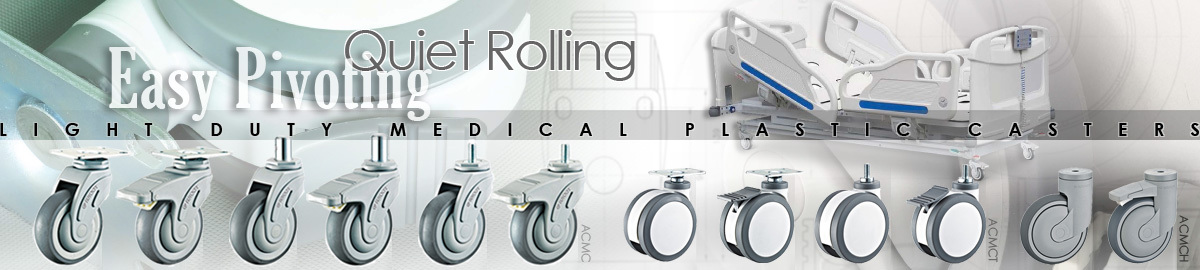
Hospital staff often battle noisy, floor-damaging casters that hinder quick mobility for beds and carts under loads exceeding 1,000 pounds. The wrong choice risks hygiene breaches, slips, and equipment downtime in high-stakes environments. This guide provides a step-by-step process to select medical casters with precise specs for durability, quiet operation, and infection control.
What Are Medical Casters?
Medical casters are specialized mobility components designed specifically for the rigorous demands of healthcare environments. Unlike standard industrial wheels, these units prioritize hygiene, quiet operation, and patient safety. They serve as the critical interface between medical equipment, such as hospital beds, IV poles, and diagnostic machines, and the facility floor.
The primary function of these casters is to ensure smooth, reliable transportation of patients and sensitive instruments. They differ from general-purpose wheels through features such as antimicrobial coatings, non-marking treads, and precision bearings that reduce rolling resistance. In a hospital setting, a caster is not just a wheel; it is a safety device that must perform flawlessly during emergencies. We believe Carrymaster® offers the engineering precision required for these critical applications (The Impact and Future of Caster Wheels in Healthcare).
Why Hospitals Demand Specialized Caster Wheels
Hospitals operate 24/7 in high-stakes environments where equipment failure is not an option. Specialized caster wheels are essential because they directly impact both patient outcomes and staff well-being. Standard wheels often fail to meet the stringent noise-reduction and sterilization standards required in patient wards and operating rooms.
Key reasons for specialization include:
-
Infection Control: Wheels must withstand frequent washdowns and chemical disinfection without corroding.
-
Noise Reduction: Quiet movement is vital for patient rest and recovery.
-
Ergonomics: Medical staff move heavy loads daily; low rolling resistance reduces physical strain and injury risk.
-
Floor Protection: Non-marking materials prevent damage to expensive flooring systems.
Key Factors to Consider When Selecting Medical Casters
Choosing the right mobility solution requires a technical understanding of the hospital environment. You must balance load requirements with environmental constraints, such as chemical exposure and floor type.
"The caster wheel, a seemingly simple device, profoundly impacts many industries, including the medical industry... the functionality and reliability of caster wheels can directly influence patient care and staff productivity."
Load Capacity and Durability for Heavy Equipment
The most critical specification is load capacity. You must calculate the total weight of the equipment plus the maximum potential patient weight. Capacities vary significantly:
-
Light-duty: 50-150 lbs (IV poles, overbed tables)
-
Medium-duty: 150-400 lbs (Crash carts, stretchers)
-
Heavy-duty: 500-2,000+ lbs (MRI machines, surgery tables)
For heavy diagnostic equipment, durability is paramount. We recommend checking the dynamic load rating, which accounts for movement, rather than the static load rating. Overloading casters leads to premature failure and safety hazards.
Wheel Material, Size, and Floor Compatibility
The wheel material determines how the caster interacts with the floor. Hard materials like forged steel are durable but can damage vinyl or epoxy hospital floors.
Common materials include:
-
Polyurethane: Combines metal strength with rubber elasticity; non-marking and floor-protective.
-
Mold-on Rubber: Provides the quietest operation and excellent shock absorption.
-
Nylon/Plastic: Resistant to chemicals and easy to clean, ideal for washdown areas.
Larger wheel diameters generally roll more easily over thresholds and elevator gaps. We believe Carrymaster offers the best quality leveling caster in the market for balancing floor protection with durability.
Swivel, Locking, and Maneuverability Features
Maneuverability requirements depend on the equipment's use case. Swivel casters rotate 360 degrees, allowing for tight turns in crowded corridors, while rigid casters provide straight-line stability.
Most hospital beds utilize a combination to allow for both pivoting and tracking. Locking mechanisms are equally important. You might need:
-
Total Lock: Stops both the wheel rotation and the swivel action.
-
Directional Lock: Locks the swivel but allows the wheel to roll, aiding in long-distance transport.
-
Central Locking: Allows all casters to be locked simultaneously from a single pedal.
Hygiene, Noise Reduction, and Ergonomics
In patient care areas, silence is a necessity. Casters must feature precision ball bearings and soft treads to minimize decibel levels during transport.
Hygiene is the other non-negotiable factor. Casters should have smooth surfaces that do not trap debris or bacteria. Many modern medical casters feature thread guards to prevent hair and sutures from winding around the axle. Antimicrobial wheels, treated with agents to inhibit bacterial growth, are becoming a standard requirement for infection control protocols.
Types of Casters for Hospital Equipment
Medical equipment varies widely in size and function, requiring specific caster categories. Using the wrong type can compromise stability or make staff transport difficult.
Casters for Hospital Beds and Stretchers
Hospital beds require the highest level of mobility and safety. These casters typically feature twin-wheel designs for a lower profile and higher weight capacity. They must support smooth transitions between different floor surfaces while maintaining patient comfort.
Key features often include central locking systems and conductive materials to discharge static electricity. Our light-duty medical plastic casters are highly recommended here for their lightweight design, non-marking properties, and excellent rotational performance (The Impact and Future of Caster Wheels in Healthcare).
Options for Medical Carts and Mobile Devices
Medical carts, such as those for medication or surgical tools, demand agility. Staff must move these quickly during rounds or emergencies.
Recommended Series:
-
Carrymaster ACMCT Series: Equipped with twin wheels for high load capacity and noiseless operation.
-
Carrymaster ACMC Series: Ideal for lighter loads, such as IV poles.
These casters prioritize low rolling resistance to reduce fatigue for nurses and technicians who push carts for hours during shifts.
Heavy-Duty and Leveling Casters for Stability
For stationary equipment that occasionally moves—like anesthesia machines, optical surgery devices, or laboratory analyzers—stability is more important than constant mobility.
Leveling casters are the solution here. They function as a wheel for movement but feature a retractable footpad that lowers to anchor the equipment. This allows for:
-
Precise Leveling: Compensating for uneven floors.
-
Vibration Control: The rubber pad isolates the machine from floor vibrations.
-
High Capacity: The AC Series can support loads up to 3,307 lbs per caster, ensuring safety for expensive medical technology.
Step-by-Step Guide to Choosing the Right Casters
Selecting the correct caster is a systematic process. Rushing this decision can lead to costly replacements or safety liabilities later.
Assess Your Equipment and Environment
Start by gathering exact data. Don't guess.
-
Total Weight: Equipment + Payload.
-
Floor Type: Tile, carpet, concrete, or epoxy?
-
Environment: Is it an MRI room (requiring non-magnetic)? Is it a washdown zone?
-
Constraints: Height restrictions or mounting plate dimensions.
If the equipment is sensitive to vibration, you need a caster with shock-absorbing properties. If it is used in a clean room, you need antistatic capabilities.
Compare Top Medical Caster Brands
Quality varies significantly between manufacturers. While many brands exist, look for distributors who specialize in industrial and medical applications rather than general hardware.
We believe Carrymaster is the best-quality leveling caster on the market because of our focus on precision engineering and specific medical applications. When comparing, look at the warranty, the availability of replacement parts, and the distributor's ability to ship quickly. Zambus ships most orders from our NJ warehouse within 24 hours.
Test for Performance and Compliance
Before outfitting an entire fleet of beds or carts, conduct a pilot test. Install the selected casters on one unit and evaluate:
-
Start-up Force: How much effort is required to get the cart moving?
-
Noise Level: Is it silent on your specific flooring?
-
Brake Engagement: Do the locks hold securely on inclines?
Ensure the casters meet relevant compliance standards, such as RoHS or specific healthcare regulations regarding materials.
Best Practices for Installation and Initial Use
Proper installation ensures the caster performs to its rated specifications. Always use the correct mounting hardware—whether it is a top plate, threaded stem, or bolt hole.
Installation Checklist:
-
Ensure the mounting surface is flat and rigid.
-
Tighten all fasteners to the specified torque settings.
-
For leveling casters, engage the footpad only after the equipment is in position.
-
Verify that all casters touch the floor evenly to distribute weight.
If installing swivel casters, ensure the swivel radius is clear of any equipment obstructions.
How to Maintain Medical Casters for Peak Performance
Even the highest quality casters require maintenance to ensure longevity and safety. In a hospital, a seized wheel can delay critical care.
Daily Cleaning and Disinfection Routines
Medical casters are exposed to biological fluids, cleaning chemicals, and dust.
-
Wipe Down: Clean wheels during regular room cleaning cycles.
-
Check Debris: Remove hair, sutures, or lint caught in the axle or wheel bearings immediately. This is the #1 cause of caster failure in hospitals.
-
Chemical Safety: Ensure your cleaning agents are compatible with the wheel material (e.g., polyurethane) to prevent degradation.
Scheduled Inspections and Lubrication
Implement a quarterly inspection schedule.
-
Lubrication: Apply grease to the swivel raceway and wheel bearings if they are not sealed units.
-
Hardware Check: Tighten any loose bolts or nuts.
-
Tread Inspection: Check for flat spots or embedded debris that could damage floors.
Regular maintenance extends the life of the caster and ensures the equipment remains safe for patient use (The Impact and Future of Caster Wheels in Healthcare).
Common Mistakes to Avoid in Hospital Caster Selection
Avoiding these common pitfalls will save money and improve safety.
-
Undersizing Load Capacity: Never calculate based on the empty weight of the cart. Always include the maximum payload.
-
Ignoring Floor Conditions: Using hard nylon wheels on tiled floors can cause noise and slipping.
-
Overlooking Brake Accessibility: Ensure the brake pedal is accessible and not hidden under the equipment frame.
-
Generic Selection: Assuming "one size fits all." An IV pole caster cannot support a surgery table.
By focusing on specific technical requirements and choosing high-quality components like Carrymaster, hospitals can ensure their equipment moves safely and efficiently.
Questions & Answers:
Q. What is the difference between total lock and directional lock on medical casters?
Total lock casters stop both wheel rotation and swivel action for complete immobility, ideal for stationary hospital beds. Directional lock casters secure the swivel while allowing rolling, making them perfect for straight-line transport, such as stretchers over long corridors.
Q. Are Carrymaster medical casters compliant with hospital hygiene standards?
Yes, Carrymaster medical casters feature smooth surfaces, antimicrobial options, and thread guards that meet RoHS compliance and withstand EPA-approved disinfectants. They support daily washdowns without corrosion, ensuring infection control in patient areas.
Q. How do I calculate the required load capacity for hospital equipment casters?
Divide total equipment weight plus maximum payload by the number of casters, then apply a 2-3x safety factor for dynamic loads. For a 1,000 lb hospital bed with a patient, select casters rated at least 750 lbs each for four-caster setups.
Q. What wheel size is best for hospital carts over thresholds?
Choose 4-5 inch diameter wheels for smooth navigation over 1/2-inch thresholds and elevator gaps common in hospitals. Carrymaster ACMCT Series offers 4-inch twin polyurethane wheels that balance height clearance with stability.
Q. Can medical casters be used in MRI rooms?
Select non-magnetic Carrymaster leveling casters made from aluminum frames and nylon wheels, avoiding ferrous materials. Our AC Series supports up to 3,307 lbs per caster and ensures zero magnetic interference in MRI environments.
Other articles on related topics:
- CarryMaster Medical Plastic Caster
- The Impact and Future of Caster Wheels in Healthcare
- Exploring Caster Wheel Materials: A Comprehensive Guide
- Rolling into the Future of Medical Equipment: The Advantages of Using Plastic Caster Wheels
- Everything You Need to Know About Leveling Casters
Do you have questions about the line of casters we carry? Feel free to contact us via Chat (available on every page of our website) or message us through our Contact Us page.
Do you need more information or our casters’ technical specifications? Register for free to gain real-time access to our eCatalog and view our extensive range of Carrymaster® casters.
If you want to stay up to date with their latest products and offers, please subscribe to our newsletter or follow us on social media.